


Charlene Akuamoah approaches costume design as a form of world-building, where character always comes first. She often starts by letting real-life moments guide her, resulting in work that feels intuitive and precise at the same time. Rooted in story, each costume tells as much about a character as their words or actions do.

Q: 3 words your friends/family would use to describe you?
A: Funny, fashionable and ambitious.
Q: Your work spans design, styling, and illustration. How do these different creative languages inform each other in your process?
A: Each one is a vehicle to communicate a story, feeling, or time period. They work so well together to move different narratives forward and I’ve been lucky enough to be able to combine all three to communicate exactly what it is that a character needs. They all lean on each other in different ways when I’m stuck trying to figure someone out.

Q: If you could dress one character for the screen, who would it be and what would they wear?
A: I LOVE this question. My answer will be different depending on what day you get me. But currently, I’d really like to dress an Alternative Black character in a highly stylized film. I’d dress them in Ann Demeulemeester, Rei Kawakubo, Vintage Gareth Pugh, Vintage McQueen and some Vivienne Westwood.


Q: When you’re approaching a new project, what’s the first thing you do—mood boards? Music? A ritual you swear by?
A: It’s all intuitive and depends on the project. I normally go straight to the interwebs to see if I can find the characters anywhere in the world, then the streets to do some people watching (I’ve found some of my characters just by sitting on a bench and watching people walk by) and then the library. I’ve also found that listening to the music that I think the character would listen to is helpful. It really puts you in their shoes. From there I start researching the community, and oftentimes I find them there!

Q: You grew up between the Netherlands and Canada with Ghanaian influences. What's a memory from your early style moments that still inspires you today?
A: I have this photo of myself when I was about 8 in Amsterdam wearing a polka dot top with a matching chiffon bow on my head (I dressed myself). When I got older, I was purging some of my clothes and realized that a LOT of it was polka dot or polka dot adjacent. My love of prints started at such an early age and as I’ve gotten older and collected many fabrics from my grandma in Ghana, I’ve found ways to incorporate prints and patterns like that into my wardrobe.

Q: How would you describe your personal style?
A: I did a quiz to find three words to describe my style and it said I was Avant Garde, Androgynous and Sporty. I like to be comfortable but stylish, especially since I'm always working. I love playing with proportions and silhouettes so there’s some interest even when I think I look boring.
Q: What’s one wardrobe staple you can’t live without?
A: My Pier Moss x Reebok floor length puffer coat. I’m obsessed!! As soon as the smallest wind whispers into my ears, I pull it out. It’s huge and so comfy and WARM and I haven’t seen anyone in the city with it. It’s so unique and functional and fits all my style words.

Q: What’s a misconception people have about costume design or styling that you’d love to debunk?
A: “It must be so fun! You just get to shop everyday!" I truly cringe when I hear this because it reduces my job to “just shopping”. Do we shop? Yes, a LOT. My shoppers are driving around sometimes for 8+ hours a day to find specific items for characters. From actual clothing items, to fabrics, notions and everything in between. But that’s not all that we do. There’s countless hours of research and collaborating with other departments. We rent or design pieces from scratch if the look that we want doesn’t exist in the world. If the colour is wrong but the style works, we dye it. If there are stunts involved, we need to duplicate the costume from head to toe multiple times. All while sticking to a certain budget and timeline and that doesn’t even scratch the surface of what we do. It comes with a LOT of work, and sometimes a lot of stress. You’re managing entire teams and also ensuring the networks, producers, and directors are happy while still getting your vision across. You truly have to love what you do, and I feel very lucky to be able to do it.


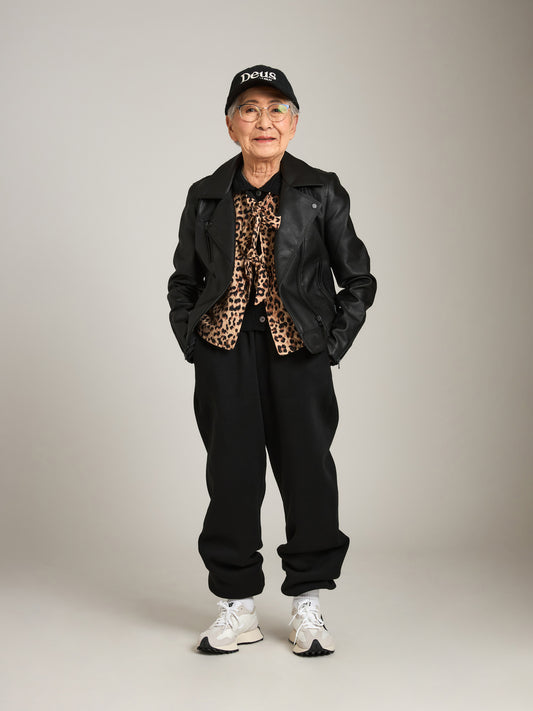
Shop Leah's Looks
-
Minji Button Up Shirt
Regular price $34.99Sale price $34.99 Regular priceUnit price per$95.00 -
Declan Vegan Leather Jacket
Regular price $64.99Sale price $64.99 Regular priceUnit price per$169.00

Related Articles
View all-

Meet: The Wild Bunch
Alexandra Schulze on floral design, seasonal inspiration, and personal style.
FeaturedMeet: The Wild Bunch
Alexandra Schulze on floral design, seasonal inspiration, and personal style.
Read More -

Stems & Staples
Stems & Staples Sat, Oct 3 at Plenty Coquitlam with The Wild Bunch & Free...
FeaturedStems & Staples
Stems & Staples Sat, Oct 3 at Plenty Coquitlam with The Wild Bunch & Free...
Read More

